TCPA
Introduction
Staying compliant with regulations, like the TCPA (Telephone Consumer Protection Act), is critical. However, many solutions that help contact centers follow these rules either slow down operations or aren't thorough enough to ensure compliance. This hurts both productivity and effectiveness.
Our TCPA PREVIEW and TCPA PROGRESSIVE dialer solutions strike the right balance. It helps your contact center meet TCPA requirements without compromising productivity. We offer tools designed to simplify compliance processes, giving you better control over operations while keeping efficiency high. This way, you can handle compliance confidently while boosting performance.
Contact us at sales@cleverideas.com.mx to schedule a call to get your TCPA dialer solution configured.
TCPA definition
The Telephone Consumer Protection Act or TCPA is a federal statute signed into law to stop the growing trend of unwanted telemarketing calls to consumers.
TCPA Do not call registry
TCPA compliant dialer
One of the main items of contention concerning how businesses can keep themselves compliant would be the definition of autodialers and predictive dialers. Under the TCPA, any device with the capacity to store and produce telephone numbers that are random or sequentially generated, then dial the said stored phone numbers, can qualify as an ATDS (automatic telephone dialing system) or autodialer.
TCPA Restrictions
- Consent does not survive when the telephone number is reassigned. You may still be in violation if the number called is reassigned or a wrong number.
- Consumers may revoke consent at any time through a reasonable way. It also means that your business has to provide consumers with a reasonable way to opt-out of their consent.
- Phone service companies can provide robocall blocking to consumers
- There are still instances where companies are allowed to automatically dial calls or where a dialer sends text messages to wireless phones even without consumer consent. This only applies to alerts and notifications about potential fraud or important reminders such as medication refills. Even then, companies still have to provide consumers with an option to opt out of the notifications.
Compliance
Preview Dialers
We have 2 very simple Dialing options to comply with TCPA:
- Preview Dialer first calls the agent and the agent initiates the call, they can then decide whether to dial it or not.
- Progressive Dialer is the same as Preview but with portfolio allocation, allowing segmentation
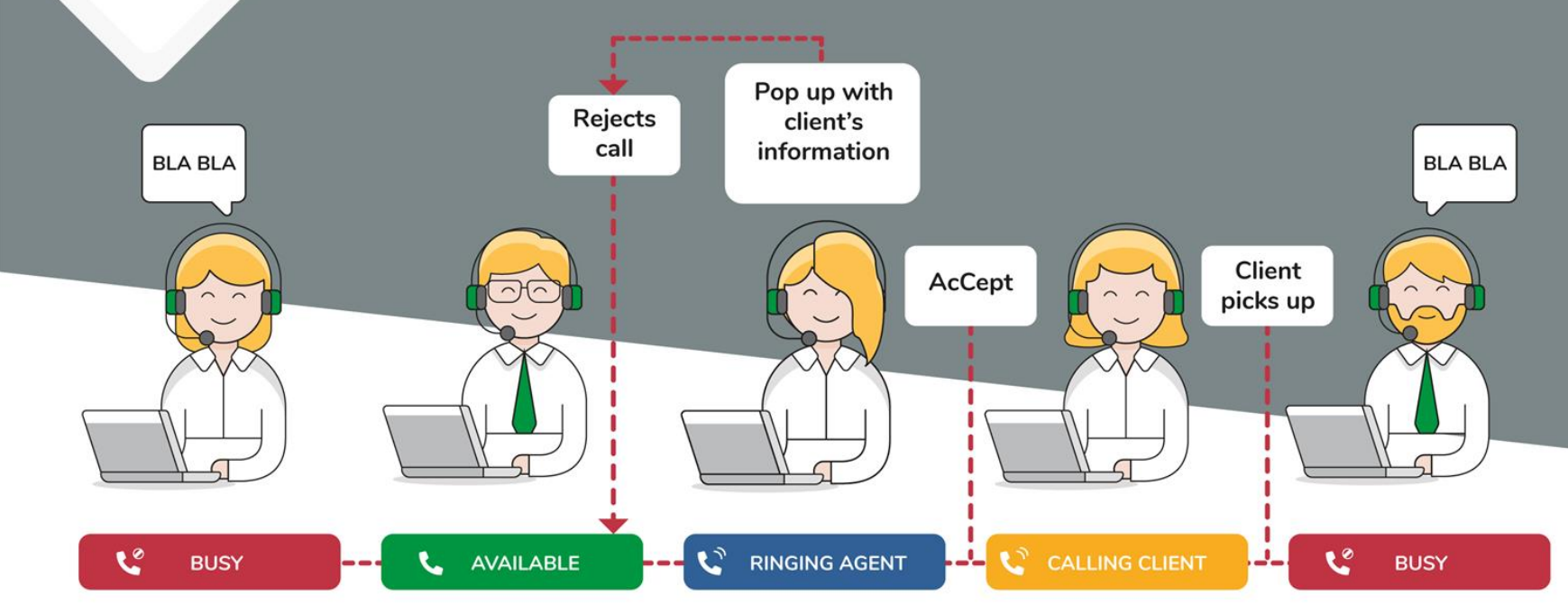
- Compliance: Reduces regulatory risks by eliminating automated calls.
- Improved Customer Experience: Customers interact with agents immediately, rather than experiencing a delay.
- Personalization: Agents can tailor conversations based on customer information.
Dynamic AI Dialer Optimization (DADO)
DADO is an AI-powered system that dynamically optimizes outbound call strategies while ensuring compliance with FCC regulations. It combines real-time consent verification, intelligent call routing, and post-call compliance audits.
Key Features
- Real-Time Consent Validation: Verifies customer consent before initiating calls.
- Interactive Voice Consent (IVC): Captures verbal consent during calls.
- Post-Call Audits: Generates compliance reports summarizing consent status, script adherence, and customer sentiment.
Benefits
- Compliance Assurance: Automates compliance checks to prevent violations.
- Operational Efficiency: Optimizes dialing strategies to balance compliance and efficiency.
- Enhanced Customer Trust: Personalizes call timing and ensures transparent consent handling.
Note Requires service hours for integration with our dialer solution and additional cost per minute applies for AI services.
Interactive Voice Consent (IVC)
Even though our Customers have the responsibility of getting consent from their end users we can implement services such as IVC as an alternative to get it by providing options via voice prompts by adding a feature to prompt for verbal consent before proceeding with the call and keep the recording for future reference and if the end-user does not want to accept, we can include an option to opt-out and include in a DNC (Do Not Call) list
Conclusion
These solutions provide a comprehensive approach to complying with FCC regulations while maintaining customer satisfaction and operational efficiency. Each method addresses key compliance challenges and offers clear benefits, with DADO serving as the most innovative and scalable option.